Green Iguana Care Sheet
Origin:
Green iguanas (Iguana iguana) are native to Central and South America, inhabiting tropical rainforests, riverbanks, and mangrove swamps. They are primarily arboreal, often found in trees near water.
Description:
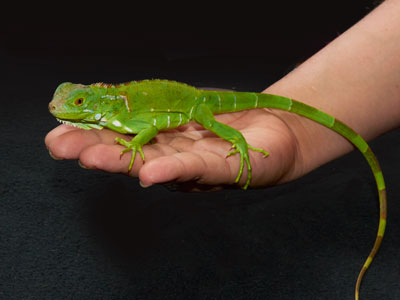
Green iguanas are large, primarily herbivorous lizards with a prominent dewlap, dorsal crest, and long tail. Adults can reach 4–6 feet in length, including the tail, and weigh 10–20 pounds. They can live 15–20 years in captivity with proper care.
Temperament:
Green iguanas can be docile when handled regularly from a young age, but adults may become territorial or defensive. They require patience and consistent interaction to remain tame.
Feeding:
- Staple diet: Dark leafy greens such as collard, mustard, dandelion, and turnip greens.
- Vegetables: Squash, bell peppers, green beans, zucchini.
- Fruits: Occasionally offer mango, papaya, berries, or melon as a treat.
- Supplements: Calcium with vitamin D3 2–3 times per week; multivitamins once per week.
- Water: Provide fresh water daily; iguanas may also soak for hydration.
Housing:
- Enclosure: Large vertical terrarium or custom habitat with climbing branches and platforms.
- Size: Minimum 6'x3'x6' for adult iguana; larger preferred.
- Substrate: Newspaper, reptile carpet, or tile; avoid loose sand or wood chips.
- Temperature: Basking 95–100°F, ambient 78–85°F; nighttime 72–78°F.
- Humidity: 60–80%; provide water bowls and occasional misting.
- Lighting: Full-spectrum UVB 10–12 hours/day is essential for calcium metabolism.
- Hides: Provide hiding spots and vertical climbing surfaces.
Handling:
Handle gently, supporting the entire body. Iguanas can be strong and may whip their tail defensively. Regular, calm handling from a young age improves tameness.
Health:
Common health issues include:
- Metabolic bone disease from inadequate calcium or UVB
- Respiratory infections from low temperatures or poor ventilation
- Parasites, both internal and external
- Obesity from overfeeding high-fat foods or fruits
Veterinary care with a reptile specialist is recommended. Monitor for lethargy, swelling, or abnormal shedding.
Grooming:
Green iguanas shed their skin regularly. Provide rough surfaces for rubbing and maintain humidity. Occasional bathing can assist with hydration and shedding.
Fun Facts:
- Green iguanas are excellent swimmers and often escape into water if threatened.
- They are primarily herbivorous, rarely eating insects in captivity.
- They use their long tails for balance and defense.
- They can recognize their keepers and respond to gentle handling.
Compliments of:
S & S Exotic Animals, Inc.
1711 Connorvale Rd., Houston, TX 77039
(281) 590-0426
www.sandsexoticanimals.com