Uromastyx Care Sheet
Origin:
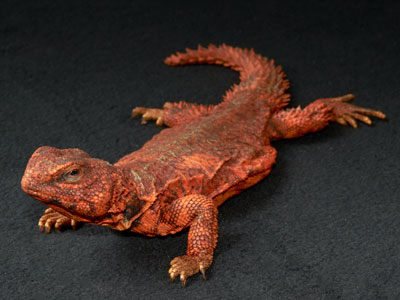
Uromastyx lizards (Uromastyx spp.), also called spiny-tailed lizards, are native to arid regions of North Africa, the Middle East, and parts of South Asia. They inhabit deserts and rocky scrublands, often basking on sunlit rocks.
Description:
Uromastyx are medium to large herbivorous lizards with thick, spiny tails used for defense. Adults typically reach 12–36 inches in length depending on species, and weigh 300–1500 grams. They are diurnal and can live 15–20 years in captivity.
Temperament:
Uromastyx are generally calm and shy. They prefer climbing and burrowing over frequent handling but can become accustomed to gentle interaction. They are diurnal and highly active during the day, especially in basking periods.
Feeding:
- Staple diet: Leafy greens such as collard greens, dandelion greens, and mustard greens.
- Vegetables: Squash, bell peppers, and carrots in moderation.
- Occasional fruits: Very small amounts of berries or melon; fruit should be rare.
- Supplements: Calcium powder without D3 several times per week; multivitamins once per week.
- Water: Provide shallow water dish; Uromastyx get most water from diet.
Avoid animal protein and high-oxalate foods like spinach and beet greens.
Housing:
- Enclosure: Large terrarium with secure lid; provide rocks, shelves, and burrowing substrate.
- Size: Minimum 4'x2'x2' for adult; larger is better for exercise and thermoregulation.
- Substrate: Sand-soil mix, clay, or tile; avoid fine sand alone to prevent impaction.
- Temperature: Basking area 105–120°F, cool side 85–90°F; nighttime 70–75°F.
- Lighting: Full-spectrum UVB light 10–12 hours/day is essential for calcium metabolism.
- Hides: Provide cool hide, warm hide, and burrow areas.
Handling:
Handle gently and infrequently, supporting the entire body. Uromastyx may be defensive initially but can become calmer over time. Avoid tail strikes, which they use defensively.
Health:
Common health issues include:
- Metabolic bone disease from insufficient UVB or calcium
- Impaction from improper substrate or foods
- Respiratory infections from poor ventilation or high humidity
- Vitamin deficiencies if diet is inadequate
Regular veterinary checkups with a reptile specialist are recommended. Monitor for lethargy, lack of appetite, or abnormal shedding.
Grooming:
Uromastyx groom themselves. Provide rough surfaces for rubbing during shedding. Occasional shallow baths may help with hydration, but frequent bathing is unnecessary.
Fun Facts:
- They use their thick, spiny tails for defense, wedging themselves into burrows to prevent predators.
- Uromastyx are primarily herbivorous and rarely eat insects in captivity.
- They can tolerate high daytime temperatures and are active baskers.
- Some species can change color slightly to regulate temperature or communicate mood.
Compliments of:
S & S Exotic Animals, Inc.
1711 Connorvale, Houston, TX 77039
(281) 590-0426
www.sandsexoticanimals.com